All guides / Ergonomic Office Chairs
What's the Best Ergonomic Office Chair? 6 Picks Compared
- Updated
- Picks
- 6
- Edition
- No. 1
- Published by
- Try Mersianto
The Branch Ergonomic Chair Pro earns best overall for its 14-point adjustment, 5D armrests, and $359 price. The Staples Hyken is the budget pick, and the Marsail has the highest listed weight capacity.
Why These Ergonomic Office Chairs Stand Out
Not every chair labeled “ergonomic” fits every body. Some chairs vanish under you at hour eight. Others make you squirm by hour two. The difference is specs, not branding. This guide ranks chairs on four things: adjustment range, weight capacity, support features, and price.
Adjustment range decides fit. Seat height, seat depth, armrests, lumbar placement, and recline tension either move on their own or they don’t. A chair with fixed parts asks your body to adapt. Weight capacity sets the structural limit. Check it against your own weight, not your guess. Support features cover lumbar shape, seat cushion construction, and backrest recline. They show up in the last hour, not the first. Price decides which qualifying chair you can actually afford.
The rankings below put those specs side by side, so you can match a chair to your body and your budget before you buy.
Branch Ergonomic Chair Pro: Best Overall Ergonomic Office Chair
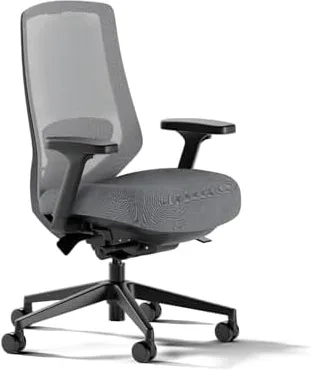
Who it’s for: somebody who wants a mesh task chair with deep adjustability and can spend about $359.
Strengths. The adjustment count is the headline: height, seat depth, tilt, forward tilt, 5D armrests, and lumbar support. Fourteen points. That’s more than most chairs in this price range offer. Seat depth is 19.7 inches, so taller sitters get real thigh support. The frame is aluminum, not the usual plastic. The 275-pound recommendation is stated plainly. Owners report comfort—and, notably, that the chair handles cross-legged or shifted-forward sitting, which is rare for a mesh back. It holds 4.3 out of 5 across 173 reviews.
Weaknesses. The recline has two positions, not a stepless tension range. If you want a sliding recline stop, you won’t get it. At 42 pounds, the chair is awkward to move between rooms by yourself. Owner feedback surfaced no recurring complaint. The low marks look scattered, not systemic.
Verdict: Buy it if you want maximum adjustability under $400 and a mesh back you can sit in different ways. Skip it if you need stepless recline or something lighter to move often.
Verdict: Branch Ergonomic Chair Pro earns its price with 14 adjustment points and a 275-pound aluminum frame, but the two-position recline and 42-pound bulk mean it’s not for everyone. Buy it if you want a supremely adjustable mesh chair under $400; skip it if you need stepless recline or easy portability.
It’s a good combination of firm soft in the right places for sitting on my feet, and I like the springiness of the back rest.
There’s plenty of room for my legs when I cross them, and the armrests can even angle out to accommodate that.
I was in between the Pro, and the Haworth Soji, but I ended up buying the Branch Pro with a headrest.
Staples Hyken Ergonomic Mesh Task Chair: Best Budget Pick
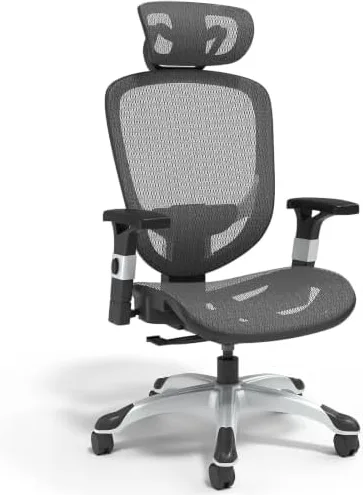
Staples Hyken Ergonomic Mesh Task Chair — Best Budget Pick
Consider this one if you want an adjustable-lumbar mesh task chair for a home office and you’re spending around $140 instead of $400.
The track record is the main argument. It holds 4.4 out of 5 across 3,674 ratings. Durability and overall satisfaction show up most often in owner feedback. You get height adjustment, adjustable lumbar support, swivel, casters, a 250-pound weight limit, and a 5-year Staples warranty. That coverage runs longer than the price suggests.
The seat is the weak point. Buyers repeatedly call it uncomfortable. The 17.9-inch seat depth is shallow; one 6-foot owner reported neck pain. Two longer-term complaints also recur. The foam padding at the front of the seat shifts or falls out, loosening the mesh. The mesh seat loses tension and sags after several years.
Buy if you’re average height, want adjustable lumbar, and care more about warranty and price than plush cushioning. Skip if you’re tall, sit for long stretches, or expect the mesh to stay taut past a few years.
Verdict: At around $140, the Hyken earns its budget pick for adjustable lumbar, a 5-year warranty, and strong owner satisfaction, but the shallow seat and sagging mesh mean average-height buyers get a short-term fix, not a long-haul chair.
Have had it for about 4-5 years I think, and the only problem I've had with it is that the foam padding on the seat keeps falling out after some time, making the seat mesh loose.
This chair has held up really well for 6 years, the foam in the front gets moved sometimes but a little glue fixes it.
I’m 6ft and I hate this chair so much, it’s cause issues with my neck and the locking mechanism is already broken.
Marsail Ergonomic Office Chair: Best for Big and Tall Users
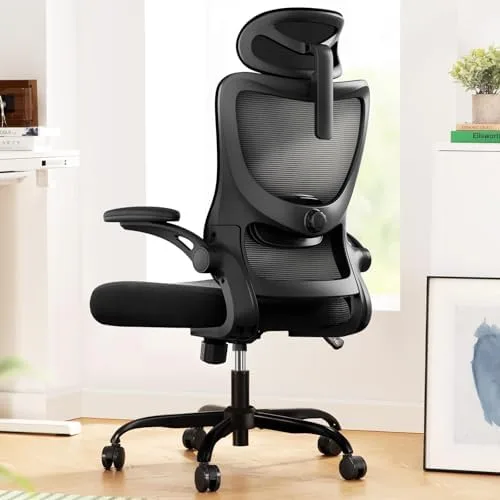
Best for: Shoppers who need a big-and-tall seat with a headrest, adjustable lumbar, and 3D armrests, and who want to stay near $126.
Where it holds up. The rated capacity is 330 pounds. That puts it in the heavier-duty bracket, not the budget lightweight class. Adjustability is the real selling point. The headrest, lumbar pad, and backrest all move. The armrests are 3D. The backrest reclines into two positions. The frame is nylon and metal, the upholstery is mesh, and the seat is foam with a boxed-edge cushion. Swivel base with casters, 30.4 pounds assembled, and the box includes the arm pads, casters, and cushion. Assembly is required, with instructions included. The 4.2/5 average across 2,124 ratings is respectable for this price tier.
Where it falls short. The listed dimensions contradict each other. That matters if you’re buying tall. The listing gives overall dimensions of 46.9” D x 24.8” W x 24.4” H. A 24.4-inch overall height is not a high-back chair. Separately, it lists a 29.5-inch seat depth and a 31.5-inch interior back height. Confirm the numbers you care about before ordering. Returns on a 30-pound chair are a chore. Two more caveats: the recommended surface is hard floor only, and the care instruction says dry clean, which is odd for mesh.
Verdict: Buy it if you want maximum adjustability and a 330-pound rating on a tight budget. Skip it if you need verified dimensions before you commit, or if it’s going on carpet.
Verdict: Buy if you need a 330-pound rated chair with adjustable lumbar, 3D armrests, and a headrest near $126. The contradictory dimensions, hard-floor-only guidance, and dry-clean-only mesh are red flags. Skip if you’re on carpet or need verified measurements before ordering.
Assembly was about as painless as it gets with furniture - even for a guy like me whose idea of "DIY" is changing a lightbulb.
I've been using it for nearly a year and haven't had any issues with the hydrolic lift like some cheaper chairs.
The adjustable lumbar support is very nice, especially for someone like me who spends hours glued to a screen.
Hbada E3 Pro Ergonomic Office Chair: Best for Lumbar Support
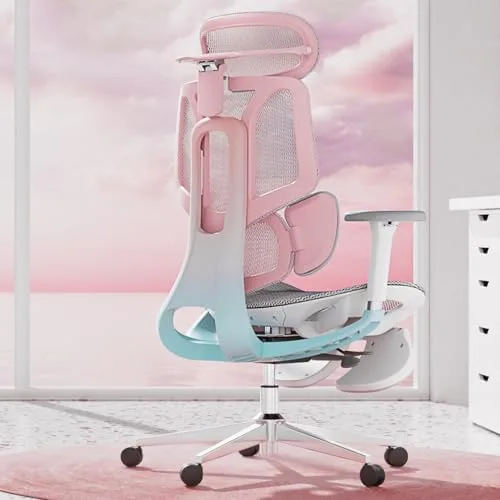
Hbada E3 Pro Ergonomic Office Chair — best for lumbar support
The Hbada E3 Pro suits taller, heavier buyers who want a lumbar-focused chair with a wide adjustment range and don’t want to spend four figures.
Its adjustment list is the main draw. The headrest and armrests are 4D. The armrests move four ways: forward and back, up and down, rotation, and lateral width. That’s a lot of positioning range at $227.04. The lumbar support is the marketed centerpiece: a three-zone dynamic design with an adjustable lumbar element. The chair is sized for big-and-tall users at 27.5 x 27.5 x 40 inches. It holds a 4.1 out of 5 rating across 1,952 reviews. The color is pink.
Two caveats. Armrest complaints recur in owner feedback, even though armrest adjustability is what the chair sells on. The listed seat and frame material is polypropylene. If you expect a plush or woven seat, study the photos before ordering.
Buy it if you want four-way armrest adjustment and adjustable lumbar support in a big-and-tall chair at a mid-range price. Skip if armrest complaints give you pause, or if you want a softer seat material than polypropylene.
Verdict: The Hbada E3 Pro is a worthy big-and-tall pick: its 4D armrests and adjustable lumbar earn the price, but recurring armrest complaints and the hard polypropylene seat cap the experience. Buy it for support, not softness.
First of all, they can’t go low enough to go under the table, so you’re going to either have them over the table, which is inconvenient, or flush.
I saw this post too late, writing you sitting on the HBADA chair with no arm rests because they suck
The foot rest constantly slides out if you're wheeling around in the chair.
HINOMI Q2 Ergonomic Office Chair: Best for Reclining
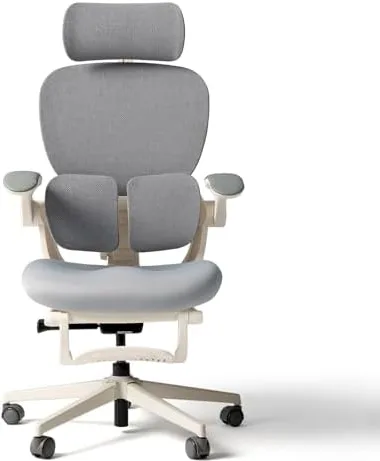
Best for anyone who wants a reclining office chair with a footrest for long stretches at a desk, and who works on hard flooring.
The Q2 leans into reclining more than most chairs at this price. The backrest drops to 135° across two positions. A footrest is included, so the recline is usable, not just nominal. A 4D headrest moves with it. The seat is memory foam under woven mesh, and seat depth adjusts by 2 inches on top of the adjustable lumbar support. That matters if you’re tall or short relative to the 18.1-inch seat depth. The polyamide-and-glass-fiber frame carries a 220-pound weight rating.
Two things to weigh. At 52.9 pounds, this chair is one you place once and leave. Moving it between rooms is a chore. HINOMI lists hard floor as the recommended surface, so carpeted rooms aren’t the intended setup. The 220-pound maximum is also modest next to comparable chairs near $350.
Across 24 reviews, the average sits at 4 out of 5. That reads as broadly satisfied buyers, not a runaway favorite.
Buy it if you recline often, want the footrest, and have hard floors. Skip it if you’re near or above 220 pounds, or need to relocate the chair regularly.
Verdict: The Q2 is a recliner-first chair worth buying only if you’re under 220 pounds, work on hard floors, and will leave it in place. For anyone near the weight limit, on carpet, or likely to move it between rooms, the 52.9-pound frame makes it an easy skip.
Really wanted a plush seat since I prioritize comfort vs airflow.
It was awesome, super happy with it so far.
Not a single problem to be noted yet.
Herman Miller Embody Ergonomic Office Chair: Best Premium Pick for Back Pain
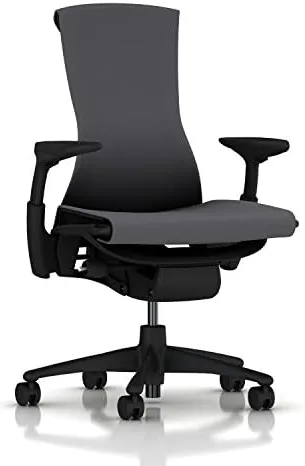
Best for buyers whose main problem is back pain and who will put in the time to dial in a chair rather than sit down and forget it.
Owners consistently report relief from back pain and comfort across long work sessions. That’s the point of this model. The adjustability backs it up: armrests move in four directions—height, depth, width, and pivot—plus two recline positions on a swivel base. The frame is aluminum with alloy steel, rated to 300 pounds. It measures 29 inches deep by 29.5 inches wide by 43.5 inches tall. You need real floor space. At 52 pounds, it’s not a chair you move casually. Herman Miller covers it with a 12-year manufacturer warranty. Carpet casters come standard. The upholstery is spot-clean only.
The complaints are just as consistent. The seat runs firm. The hard plastic hammock under it leaves some owners with leg tingling, stinging, or circulation trouble. Buyers also describe a lengthy adjustment period. Some never get comfortable at all. Several single out the materials’ general stiffness.
Buy it if back support outweighs cushioning and you’ll spend weeks tuning it. Skip if you want a soft seat, have leg circulation sensitivities, or want a chair that fits on day one.
Verdict: Buy only if back pain outweighs a firm, unforgiving seat. The Embody delivers real adjustability and a 12-year warranty, but leg tingling and a weeks-long break-in are unacceptable at this price. Skip if you want immediate comfort or have circulation issues.
As great as it all looks and sounds, the chairs cushioning/hard plastic hammock design made my legs or rather the skins got a tingling/stinging feeling after a short time even with the most straight sitting posture and footrest.
It does take awhile to get the chair fined tuned (especially the backrest adjustment) to your own body, but once you do my pain went away and I can now sit for 10+ hours.
First time in my life i was able to sit for 4 straight hours without fatigue or pain and i only got 4 hours of sleep that night because i lost track of time.
How the Top Ergonomic Office Chairs Compare
| # | Product | Award | Price | Rating | |
|---|---|---|---|---|---|
| 1 | Branch Ergonomic Chair Pro, Mesh Office Chair with 14 Points of Adjustment | best overall | $359 | 4.3/5 | Check price |
| 2 | Staples Hyken Ergonomic Mesh Task Chair, Lumbar Support, Black | best budget | $140.01 | 4.4/5 | Check price |
| 3 | Marsail Ergonomic Office Chair: Office Desk Chair with High Back Mesh and Adjustable Lumbar Support Rolling Work Swivel Task Chairs with Wheel 3D Armrests and Headrest | best for big and tall | $125.99 | 4.2/5 | Check price |
| 4 | Hbada E3 Pro Ergonomic Office Chair, Big and Tall Office Chair - with 3-Zone Dynamic Lumbar Support, 4D Adjustable Headrest, 4D Adjustable Armrests, Pink | best for lumbar support | $227.04 | 4.1/5 | Check price |
| 5 | HINOMI Q2 Ergonomic Office Chair, Adjustable Lumbar Support (Gray) | best for reclining | $349.99 | 4/5 | Check price |
| 6 | Herman Miller Embody Ergonomic Office Chair | Fully Adjustable Arms and Carpet Casters | Charcoal Rhythm | best premium for back pain | $698 | 3.7/5 | Check price |
What to Look for in an Ergonomic Office Chair
An ergonomic chair only works if it fits your body. Evaluate adjustments before styling.
Seat height range. Your feet should rest flat while your thighs sit roughly parallel to the floor. A broader range helps shorter and taller users.
Seat depth. A sliding seat pan lets you set the front edge so it doesn’t press behind your knees.
Lumbar support. Look for height-adjustable lumbar support, and depth adjustment if available, so the curve lands in your lower back rather than above or below it.
Armrests. Four-way adjustable arms—height, width, angle, and forward/back—help you keep shoulders relaxed instead of reaching.
Weight capacity. Compare the stated limit against your own weight. Leave margin for the cylinder and mechanism.
Recline and tension. A lockable back and adjustable tilt tension let you change posture through the day.
Price and support. Weigh cost against warranty length. Check whether replacement parts and casters are sold separately.
Questions before you buy
What is the most important adjustment on an ergonomic office chair?
Nothing in this lineup ranks adjustments by importance, so check the one that fits your body first: seat height and seat depth. Buyers looking at the Branch Ergonomic Chair Pro ($359) get height, depth, and tilt adjustment plus 5D armrests, while the HINOMI Q2 ($349.99) offers a 2-inch seat depth adjustment and flip-up armrests, and the Staples Hyken ($140.01) covers adjustable height and lumbar support.
How much should I expect to spend on a good ergonomic office chair?
In this guide, ergonomic office chairs run from $140.01 for the Staples Hyken Ergonomic Mesh Task Chair to $1,499 for the AUTONOMOUS ErgoChair Pro, with most options falling between $227.04 for the Hbada E3 Pro and $499 for the Branch Ergonomic Chair. So expect to spend roughly $225 to $500 for a well-reviewed model, and more only if you want premium features.
Is mesh or foam better for an ergonomic office chair?
These chairs don't settle mesh versus foam outright — most pair a mesh back with a foam or memory foam seat, as on the $359 Branch Ergonomic Chair Pro and the $349.99 HINOMI Q2. For the trade-offs, owners of the Staples Hyken report the mesh loosening and sagging with age along with seat foam shifting or falling out, so mesh generally serves breathable back support while foam serves cushioned seat comfort.
Do I need 4D armrests on an office chair?
No — 4D armrests are optional, and the only chair here with them is the Hbada E3 Pro at $227.04, which is also the one listing armrest issues as a con; alternatives include the HINOMI Q2's flip-up armrests, the Branch Ergonomic Chair Pro's 5D armrests, and the Branch Ergonomic Chair's height-only adjustment, so pick based on whether you need width, pivot, or depth movement for your desk and shoulders.
What weight capacity should I look for in an ergonomic office chair?
The listed capacities in this guide run from 220 pounds on the HINOMI Q2 to 275 pounds on both the Branch Ergonomic Chair and Ergonomic Chair Pro, with the Staples Hyken at 250 pounds, so 275 pounds is the highest figure stated here if you want the most headroom. The AUTONOMOUS ErgoChair Pro listing does not include a maximum weight recommendation, so check that spec with the manufacturer before buying.
Can an ergonomic office chair help with back pain?
Nothing in this guide confirms that any chair will relieve back pain, though several models offer adjustable lumbar support, including the Hbada E3 Pro, the Branch Ergonomic Chair, and the Staples Hyken, and owners report comfort with the Branch Ergonomic Chair Pro. The Autonomous ErgoChair Pro is marketed as being "For Back Pain Relief," while the Staples Hyken drew complaints of uncomfortable seating and neck pain. Buyers with existing pain should check lumbar and seat-depth adjustability plus the return policy before buying.
How do I know if a chair's seat depth is right for me?
Seat depth in this guide runs from 17.9 inches on the Staples Hyken to 22 inches on the Branch Ergonomic Chair, so match the listed number against your own thigh length before buying. If you are unsure, the HINOMI Q2 is the one chair here with a 2-inch seat depth adjustment, which lets owners fine-tune the fit after delivery.
Is a headrest worth it on an ergonomic office chair?
Only two chairs here include a headrest: the HINOMI Q2 ($349.99) lists a 4D headrest and buyers mention overall satisfaction, while the Staples Hyken ($140.01) provides head support yet owners report neck pain and uncomfortable seating. Neither entry states whether headsets can be removed or adjusted for taller users, so check the return policy or try one in person before paying extra for it.